

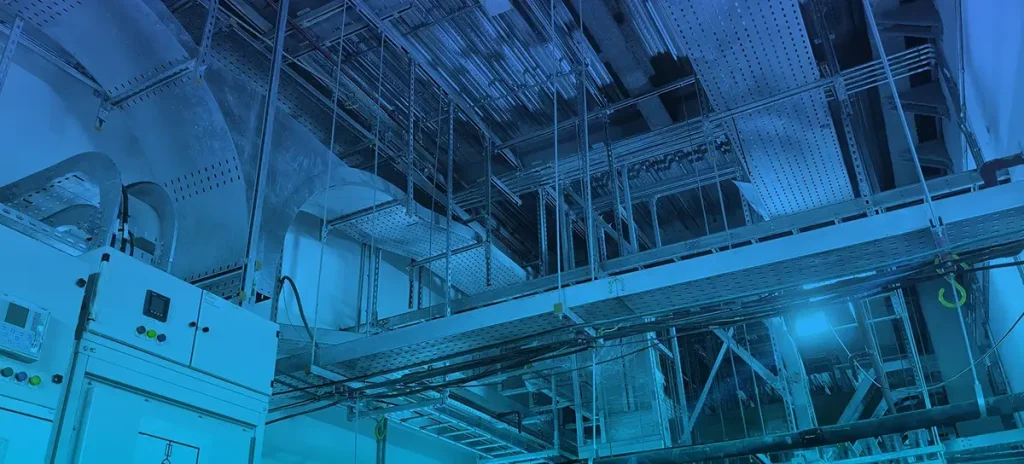
Large infrastructure projects operate under intense pressure. Tight timelines, multiple stakeholders, complex coordination requirements, and evolving site conditions leave very little room for execution errors.
In many projects, delays do not begin during installation. They begin much earlier — during incomplete engineering validation and poor manufacturability planning.
For infrastructure systems such as cable trays, raceways, modular supports, and electrical distribution accessories, engineering validation before manufacturing plays a critical role in reducing project delays, rework, and site-level conflicts.
The Hidden Cost of Late-Stage Design Changes
Many project execution challenges occur because systems are manufactured before:
– site coordination is completed
– routing conflicts are resolved
– installation feasibility is verified
– load conditions are validated
This often results in:
– dimensional mismatches
– installation difficulties
– excessive site modifications
– material wastage
– delayed approvals
– increased labor dependency
In large-scale projects, even small coordination errors can impact multiple downstream activities.
Why Manufacturability Matters
A design may look technically correct on paper but still be difficult to manufacture or install efficiently.
Manufacturability validation ensures:
– dimensions are practical
– fabrication is achievable
– installation access is available
– support locations are feasible
– accessories align correctly
– production timelines remain realistic
This process reduces uncertainty before fabrication begins.
Common Site-Level Execution Challenges
Infrastructure projects frequently encounter:
– last-minute routing changes
– space clashes with HVAC systems
– improper support spacing
– non-standard site conditions
– alignment issues
– missing accessories
– uncoordinated MEP layouts
Without engineering validation, these issues are discovered only during installation, resulting in delays and rework.
Benefits of Early Engineering Validation
Validating systems before manufacturing offers major execution advantages.
Reduced Rework
Factory-level corrections are faster and more economical than site-level modifications.
Faster Installation
Pre-engineered systems simplify installation and reduce dependency on on-site fabrication.
Better Coordination
Engineering validation improves alignment between:
– consultants
– EPC contractors
– site engineers
– fabrication teams
Improved Quality Consistency
Controlled manufacturing processes ensure dimensional accuracy and repeatability.
Faster Project Execution
Well-planned systems reduce installation interruptions and improve workflow continuity.
The Advantage of Factory-Made Custom Accessories
Many infrastructure projects require:
– custom bends
– reducers
– tee sections
– vertical drops
– non-standard supports
– project-specific profiles
When these are fabricated at site level:
– quality becomes inconsistent
– timelines increase
– installation accuracy reduces
Factory-manufactured custom accessories provide:
– better finish quality
– dimensional precision
– faster installation
– improved structural consistency
Why Traceability and Process Control Matter
Modern infrastructure projects demand accountability.
Engineering-driven manufacturing workflows provide:
– material traceability
– inspection checkpoints
– process consistency
– production tracking
– quality documentation
This becomes especially important in:
– data centers
– airports
– healthcare facilities
– metro rail
– industrial infrastructure
where reliability and compliance are critical.
Supporting Faster Infrastructure Delivery
Today’s infrastructure projects prioritize:
– execution speed
– coordination efficiency
– predictable delivery
– reduced downtime
– scalability
Engineering validation directly supports these goals by minimizing uncertainty before execution begins.
Instead of reacting to problems at site level, project teams can resolve them proactively during the engineering stage.
ESMI’s Engineering-Led Execution Approach
At ESMI, engineering validation forms an integral part of the manufacturing workflow.
Before production begins, systems are evaluated for:
– manufacturability
– installation feasibility
– structural performance
– project coordination
– routing practicality
– execution efficiency
Our integrated manufacturing capabilities allow faster response to:
– custom requirements
– drawing revisions
– non-standard accessories
– urgent project needs
By combining engineering support with precision manufacturing, ESMI helps infrastructure projects reduce execution delays and improve installation reliability.
Conclusion
Infrastructure execution is no longer just about supplying products. It is about ensuring systems perform efficiently from engineering approval to final installation.
Projects that invest in engineering validation before manufacturing benefit from:
– fewer delays
– reduced rework
– faster installation
– better coordination
– improved execution predictability
As infrastructure projects become more complex, engineering-led manufacturing will continue to play a critical role in achieving reliable and scalable project delivery.
For more information, contact: mails[a]esmi.co.in
